 TaxBuddie
Taxi drivers
Sign in
Create Account
TaxBuddie
Taxi drivers
Sign in
Create Account
TaxBuddie · Practical driver guides
Keep taxi costs and their evidence together.
Organise taxi and private-hire expense records, receipts and platform fees with TaxBuddie. Includes a worked example and a practical weekly checklist.
Free shift and mileage tracking. Pro tools £3.99/month.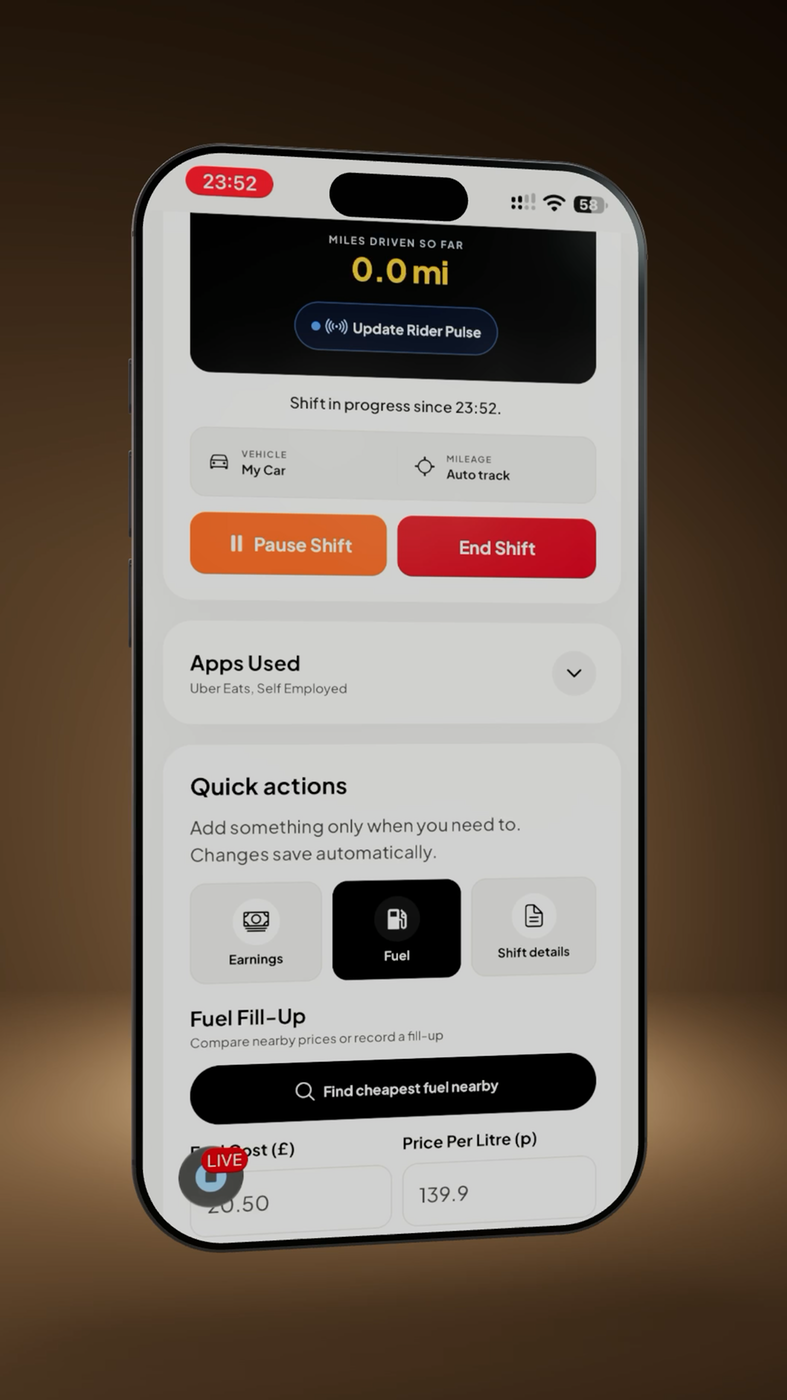
Build a record you can explain later
Taxi and private-hire work can produce fuel receipts, parking payments, platform charges and larger periodic bills. A bank transaction alone may not explain what the purchase was for. Keep the receipt or invoice and a short business-purpose note alongside the amount.
TaxBuddie helps organise those records with your earnings and shifts. A recorded cost is not automatically an allowable deduction: the business purpose, any private use and your accounting method still matter.
What to keep for each cost
- Date and supplier: use the receipt or invoice to identify the transaction, and keep the payment evidence.
- Amount and description: record the full amount shown and what was purchased. Note any refund separately so the original purchase remains understandable.
- Business context: explain why the cost relates to your driving work and flag mixed personal use for review.
- Evidence: attach the receipt where supported, keep the source document, and check that photographed text is readable.
Group vehicle spending, platform charges and other overheads so that recurring costs are easier to compare. Keep insurance and servicing documents even when they relate to a longer period than one shift.
Worked example · illustrative figures
Separate fares, fees and money received
A platform statement shows £600 in fares, £90 in platform fees and a £510 payout. The payout is £600 minus £90; it is not another £510 of fares.
| Statement item | Amount |
|---|---|
| Gross fares | £600 |
| Platform fees | £90 |
| Net payout | £510 |
If the fees are already included in imported records, entering them again would double count the cost. Compare the imported entries with the source statement before adding anything manually.
The driver also keeps a £45 fuel receipt and a £12 parking receipt. These are spending records for review, not a claim that every amount is deductible. This example does not calculate taxable profit.
Keep mileage separate from the deduction method
Your mileage record helps explain vehicle use. Your receipts explain spending. Keep both organised, then use HMRC guidance or your accountant to decide which expense method applies. Do not assume you can deduct all vehicle receipts in addition to a mileage-based deduction.
HMRC excludes non-business travel costs and fines from allowable travel expenses. Vehicle eligibility and other rules also matter. Read the official vehicle and travel guidance and simplified vehicle expenses guidance before applying a method.
A ten-minute weekly record check
- Compare recorded fares with cash, card and platform sources. Investigate differences rather than changing totals just to match a payout.
- Review new expenses for duplicate entries, missing evidence and unclear descriptions.
- Check recurring bills and refunds. Flag anything with personal use for your adviser.
- Keep unresolved questions in a short list ready for your next review or accountant handover.
Can I keep receipts in TaxBuddie?
Yes. Expense records support receipt evidence. The free plan includes three expense records; Pro adds unlimited and recurring expense records and export tools.
Will TaxBuddie decide what I can claim?
No. It organises records and evidence. Allowability remains a separate decision for you or your qualified adviser.
About TaxBuddie
TaxBuddie is a mileage and expense tracker for UK drivers and delivery riders, created by Raheem Shah at Pluto Software Solutions. Keep shifts, earnings, mileage, expenses and receipts organised across supported devices.
TaxBuddie provides record keeping and exports. It does not submit tax returns or MTD updates to HMRC.
Create Account